
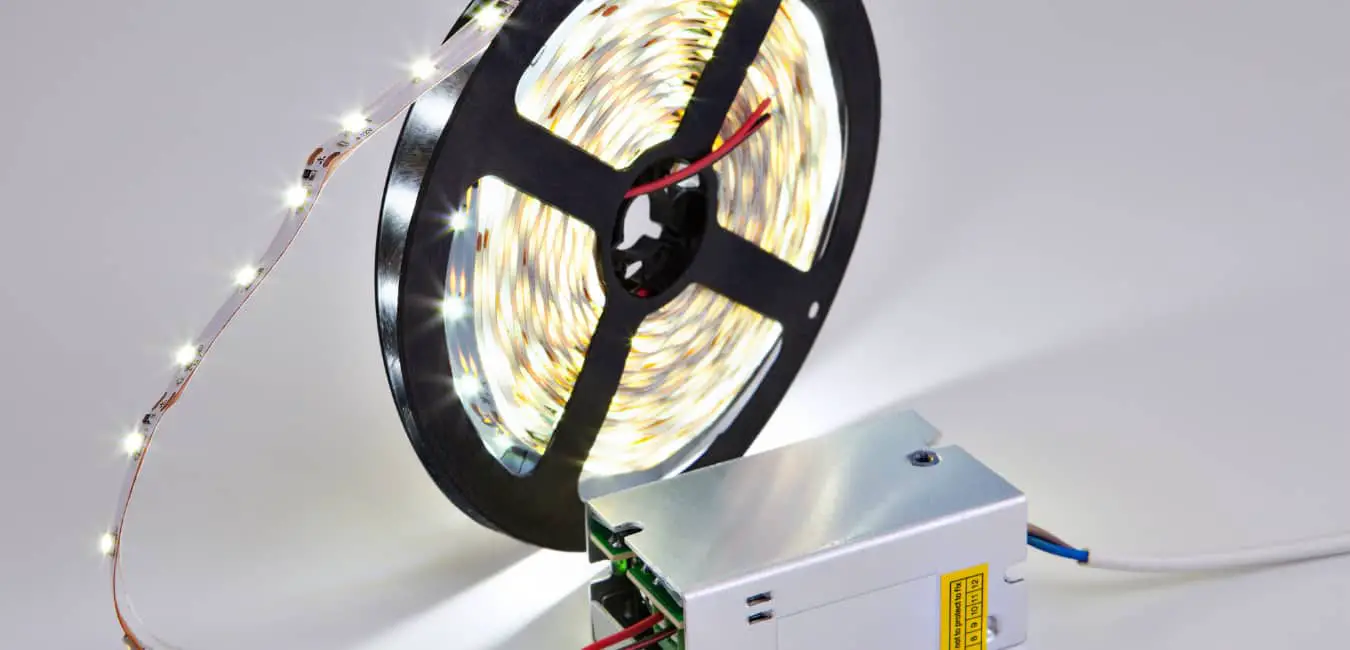
Before we get into the differences, let us understand what it is and what they are used for.
LED drivers, also called LED, are power sources that regulate the output current and reduce the voltage from a high level to a low level. LED Power Supply are conventional AC – DC power supplies that provide a constant voltage. This may sound confusing, right? Now let us look at the differences in detail to clear up the confusion.
As we know that ” LED drivers and “power supplies” are interchangeable, let us see what distinguishes the two.
Below, we will explain the differences between LED drivers and power supplies.
Based on an LED driver, there are two functions or purposes required from a LED, a LED driver is designed to supply low voltage in the range of 12v to 24v, the DC, however, an LED driver supply high voltage, which is from 120v to 277v, since this is AC current, so LED driver is used to regulate the voltage from high to low.
Another purpose of the LED driver is to protect a LED light fixture from voltages that can fluctuate between high and low, which could affect LED bulbs. So, when the voltage changes, the current supply changes as well. Supplying high or low current can cause light output to vary due to temperature fluctuations within the LED. Whereas
The power supply provides a constant voltage to the load depending on the capacity of the bulbs, and it regulates the fluctuating voltage from high to low and provides the limit current to protect the power supply and prevent excessive destruction. A practical example of this is the Mean Well LRS-150-24 Constant Voltage Power Supply, which delivers a stable 24V output regardless of minor voltage fluctuations. Power supplies like this are commonly used for LED strips and modules that already have built-in current regulation. https://www.amazon.com/LRS-150-24-Switching-Supply-Single-Output/dp/B018RE4CWW?crid=3I7AVZSAVTCMP&dib=eyJ2IjoiMSJ9.sQkJGNWGvEEzUWFUmQu28K9ngyopBtl-HbwyBtxmoB9O5NFIdl9g6Zwf9_pg7_F8rwdZaQqtryLsA0rcw76O1QHBrVknKkfamRfz-4yDeuLxy3ATCv2tCVPgSgR8tU4uxQWYG91mdG4Z4gYTap3bdNEs23YpgHJ6ukI5jhnO6Z9k6wo3cudonuRaWlS4uOEBEok_zlLaUCw-CWIf-LcfBXo90eZfjUw5lw7xtK3HL7g.wWIRiLV4eX9dEGLAC87zyQ7RVP4gIymb8AXGK0ivsB4&dib_tag=se&keywords=Mean+Well+LRS-150-24+Constant+Voltage+LED+Power+Supply+%2824V%2C+6.5A%29&nsdOptOutParam=true&qid=1767367640&sprefix=mean+well+lrs-150-24+constant+voltage+led+power+supply+24v%2C+6.5a+%2Caps%2C1585&sr=8-1&linkCode=ll1&tag=7stepstofll-20&linkId=ff97b1b29ec4e92ac1fff9c7ae731c52&language=en_US&ref_=as_li_ss_tl
LED drivers can be regarded as a stand-alone power supply, which consists of a power source and a control circuit to produce outputs matched to the electrical characteristics of the components of LED, such as. Efficiency, control, cost, dimming, size, power factor, flicker, cost, lifetime, input, and output. WHEREAS
Power supplies are designed to provide stable power to the LEDs so that the current can flow within a certain limit that is required.
LED drivers require a fixed output current and range of output voltage, and there is only one output current specified in amps or milliamps, along with a range of voltages that vary depending on the capacitance of LED. For example, if the current output is 7oomA, the output voltage range, the DC volts will be 4.13v. For instance, a LPC-35-700 35W Constant Current LED Driver supplies a fixed 700mA current while automatically adjusting voltage based on the LED load, making it ideal for high-power LEDs that require precise current regulation. https://www.amazon.com/DynMach-LPC-35-700-35W-Driver-Architectural/dp/B0D9DD14SG?crid=1NO9R9VZB7S2L&dib=eyJ2IjoiMSJ9.YrJOmmiUs_3ArgXfKGLkrVzMFT-bQVKhkomACVPuQeCDq6Ni1t7U_NcWvZPVEpmANjynxnFwM0BcnW1ag5on2inFVM9LHIM3VsnYjXNMY_do2CIaplz6WgqvfUiYhfvonbM8kUA9P8Vrwnj3zB3_ZcQRFn_Ff7g8ZlUqBwfXgHlkvIr34940xllm1BD_8LmgCj6-cJsrEsPmch1pCa4JsqPH5HfOaFrdKzUV4vvTono.OAFdD2b26PDAmunECSFjNFThwps77h7a_5NBI5UFz9Y&dib_tag=se&keywords=Mean%2BWell%2BLPC-35-700%2BConstant%2BCurrent%2BLED%2BDriver%2B%28700mA%29&nsdOptOutParam=true&qid=1767368401&sprefix=mean%2Bwell%2Blpc-35-700%2Bconstant%2Bcurrent%2Bled%2Bdriver%2B700ma%2B%2Caps%2C474&sr=8-1&th=1&linkCode=ll1&tag=7stepstofll-20&linkId=301b27b36e96eaa03573d720c62557d3&language=en_US&ref_=as_li_ss_tl
Power supplies require a fixed output voltage at maximum output current because the current of the LEDs is already regulated either by simple resistors or an internal constant current driver supplied with the module LED.
LEDs require a stable voltage of about 12 or 24 V. At a voltage of 24 V, the maximum current is about 1.04 A. The LED driver and the power supply are always in the range of 12 V and 1 A, respectively. The only difference arises when the LEDs have a higher capacity than 1 A, then a higher power supply is needed.
If the voltage in the power supply permanently rises above 12 V and 1 A, the load voltage and current are reduced to a low value until the power supply is reset. So, LED does not provide constant impedance, but the changes can be caused by temperature, aging, or sunlight, so you need a power supply that can control the current and provide the constant voltage.
The difference between the LED driver and the power supply also depends on the type of LED, such as dimmer switches, surface-mounted devices, crisps on dials, crisps on wide bands.
Note that the power supply is not always the same because the current that is automatically provided varies. It can work with a constant voltage supply in a current limiting resistor.
The LED reduces the fluctuations of the forward voltage at the semiconductor junctions of the LEDs, while the power supply works by modulating an electrical signal with one or more switching elements such as high-frequency power MOSFETs.
Final Thoughts
All in all, keep in mind that the LED driver would get too hot, which may lead to unstable malfunction and poor performance.
For LED to work properly, the standalone LED driver must provide a constant power supply to LED. It is important that the output of the device provides either a constant voltage or a constant current, both of which are required by the LED device receiving the power.
The Different Between LED Driver and Power Supply:
| LED DRIVER | POWER SUPPLY |
| Reduce variation in forwarding voltage across the semiconductor junction of the LEDs. | Operate by modulating an electrical signal using one or more switching elements such as power MOSFET at a high frequency. |
| It is a stand-alone power supply consisting of a power source and a LED control circuit to produce outputs adapted to the electrical characteristics of LED packages. | They have been designed to drive the LEDs to work stably |
| Low-voltage transformers and LED emergency backup Drivers | Constant voltage power supplies and constant curent drivers |
| Were designed to regulate power current output to an LED | Were used to providing a constant voltage |
| Runs directly from an alternating current power supply also operate on square wave input. | They are designed to operate LED modules at a fixed voltage typically 12v or 24v. |